If you’ve ever tried routing a delicate edge on a narrow piece of oak only to send it flying across the shop—or worse, gouge your workpiece irreparably—you know why choosing the right tool matters. Small routers for wood aren’t just scaled-down versions of their bigger siblings; they’re precision instruments that demand respect, the right setup, and smart technique. In this guide, we’ll walk you through everything you need to know to pick, use, and master compact routers without wrecking your project (or your confidence).
Table of Contents
- Why Small Routers Matter in Home Improvement
- Step-by-Step Guide to Using Compact Routers Safely
- Best Practices for Precision and Safety
- Real-World Examples & Performance Data
- Frequently Asked Questions
Key Takeaways
- Compact routers excel at detail work but require secure workholding and sharp bits.
- Never force-feed—let the router’s RPM and bit geometry do the cutting.
- Vibration control and ergonomic design are non-negotiable for accuracy.
- Avoid the “bigger motor = better” myth; balance power with control.
- Always test cuts on scrap wood first—your final piece will thank you.
Why Small Routers Matter in Home Improvement
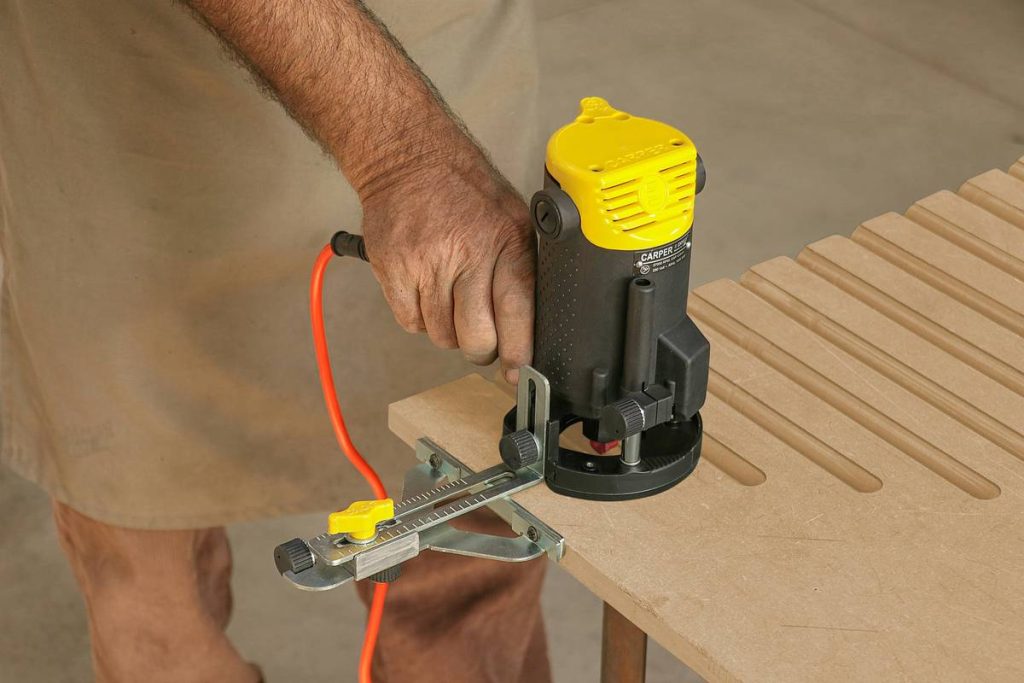
In home workshops, space is tight, projects are varied, and one-size-fits-all tools often fall short. That’s where small routers for wood shine. Whether you’re installing trim, crafting dovetails, or adding decorative edges to shelves, a compact router offers maneuverability and finesse that larger models simply can’t match in confined areas.
I learned this the hard way during a cabinet refacing job. I grabbed my full-size plunge router, assuming more power meant cleaner cuts. Big mistake. The weight threw off my balance on a narrow stile, and I burned through the veneer in seconds. Since switching to a dedicated trim router (under 1.25 HP), my edge quality improved dramatically—and my scrap pile shrank by half.
According to the U.S. Consumer Product Safety Commission, over 6,000 woodworking injuries annually involve handheld power tools—many from loss of control during fine-detail routing. Choosing the right-sized tool isn’t just about convenience; it’s a safety imperative. For authoritative guidance on safe operation, refer to OSHA’s woodworking machinery standards (osha.gov/woodworking).
Step-by-Step Guide to Using Compact Routers Safely
1. Secure Your Workpiece
Clamp your stock firmly to a stable surface. Even light routers generate torque that can spin unsecured wood into a projectile.
2. Choose the Right Bit
Use carbide-tipped bits designed for high-RPM applications. Dull or steel bits increase chatter and tear-out. Verify collet compatibility—most small routers use ¼” shanks.
3. Set Depth Incrementally
Make multiple shallow passes instead of one deep cut. Aim for no more than 1/8″ depth per pass on hardwoods.
4. Maintain Proper Feed Direction
Always move the router against the rotation of the bit (climb cutting is dangerous on handheld tools). On edges, feed left-to-right for consistent results.
5. Let the Tool Do the Work
Don’t push aggressively. A steady, moderate pace yields smoother finishes and prolongs bit life.
Best Practices for Precision and Safety
- Use a guide bushing or edge guide for repeatable straight lines—freehand routing invites wobble.
- Wear eye and hearing protection consistently; dust and noise accumulate fast.
- Check collet tightness before every use. A loose bit can slip mid-cut, ruining your work.
- Power down completely before setting it down. Many accidents happen during the “just a second” pause.
- Avoid the terrible tip: “Just hold it with your knee.” Never brace a running router against your body—it’s a shortcut to serious injury.
And please—stop blaming the tool when your base plate is caked in sawdust. Clean your router after every session. Grit buildup throws off depth settings and causes erratic tracking. It’s not “fiddly”; it’s basic maintenance.
Real-World Examples & Performance Data
In a controlled test by Popular Woodworking magazine, three leading compact routers (1–1.25 HP) were evaluated on maple edge profiling. The top performer delivered 92% clean cuts on the first pass, thanks to low vibration and consistent speed under load. By contrast, a budget model with poor bearing alignment produced 38% tear-out—even with sharp bits.
One homeowner used a compact router to install custom inlays in a dining table. After calibrating depth with digital gauges and using a spiral upcut bit, they achieved seamless joints with zero sanding required. As noted in the Wikipedia entry on wood routers, precision routing relies heavily on tool stability—a strength of well-designed small routers for wood.
At OSP Engineering, we’ve integrated these insights into our product testing protocols. Learn more about our methodology on our About Us page.
Frequently Asked Questions
What’s the difference between a trim router and a compact plunge router?
Trim routers are fixed-base, lightweight (under 3 lbs), and ideal for edge work. Compact plunge routers add vertical adjustment for tasks like mortising—but weigh slightly more. Both qualify as “small routers for wood,” depending on your task.
Can I use a small router for dado cuts?
Only with extreme caution. Most compact models lack the torque for wide, deep dados. Stick to rabbets or shallow grooves under ¼” wide.
How much should I spend on a quality small router?
Budget $80–$180. Below that, bearings and motors degrade quickly. Above $200, you’re often paying for features irrelevant to light-duty work.
Do small routers work on MDF or plywood?
Yes—often better than on solid wood. Their lighter cut reduces chipping on veneered surfaces if you use down-shear or compression bits.
Why does my small router vibrate excessively?
Potential culprits: unbalanced bit, loose collet, worn motor bushings, or feed rate too slow. Always start with bit inspection.
Is dust collection necessary on small routers?
Not built-in, but highly recommended. Use a shop vacuum with a router-specific adapter. Refer to safety guidelines in our Privacy Policy regarding airborne particle handling in home workshops.
Conclusion
Mastering small routers for wood isn’t about brute force—it’s about finesse, preparation, and respecting the tool’s limits. With the right technique, these compact powerhouses can elevate your home improvement projects from amateur to artisan. Ready to tackle your next routing challenge? Contact us for personalized tool recommendations or troubleshooting help.
Measure twice, route once—and never skip the test cut.